Second chance auto financing in Genesee MI supports drivers who need a fresh start with credit while securing a dependable used vehicle. This guide explains how second chance car loans work in Genesee County communities such as Flint, Burton, Grand Blanc, Davison, Fenton, Clio, Mount Morris, and Swartz Creek. Find out what lenders consider beyond a credit score, how income and stability can strengthen an application, and which documents speed up approvals. Learn practical ways to set a realistic payment target, choose terms that fit your budget, and use on time payments to rebuild credit over time. Shoppers comparing options can review used inventory choices, see market insights for Genesee County, and understand the differences between second chance financing and buy here pay here. The goal is straightforward guidance that helps you choose the right path toward ownership with clarity and confidence.
After a lender review, approvals typically align with verified income, residence, and insurance details. Many applicants receive a decision within a short timeframe, then match vehicles to an approved payment range to keep monthly costs comfortable. Details about state documentation, budgeting tips, and credit rebuilding strategies are outlined below. Additional background can be found on the used inventory, blog, and contact pages for policy and store information.
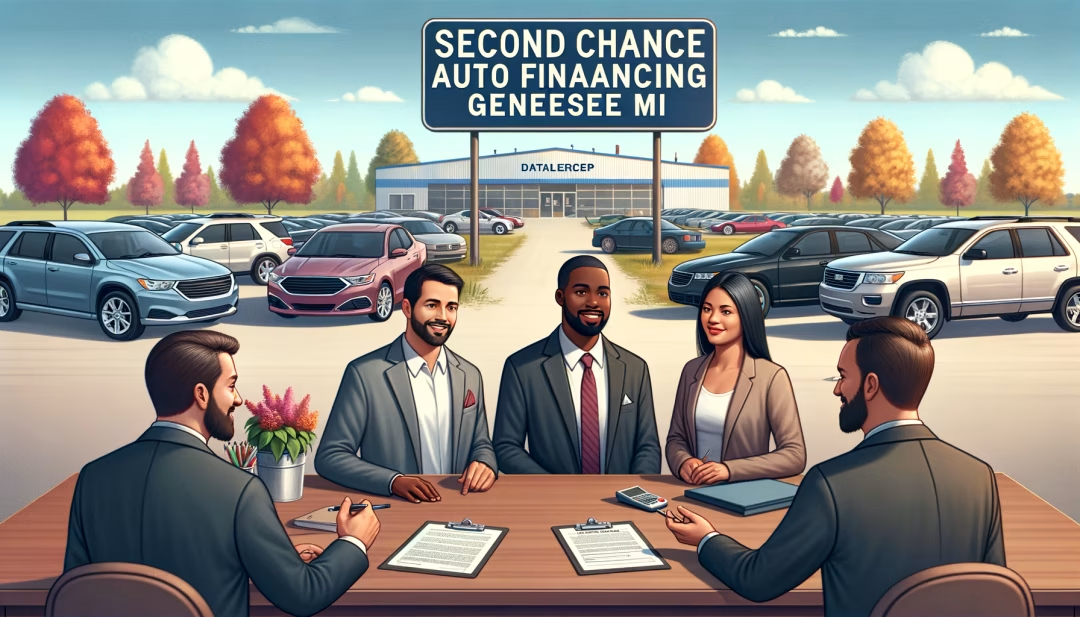
Second chance auto financing is designed for shoppers in Genesee MI who have limited or challenged credit and still need a reliable car, truck, or SUV. Rather than focusing only on a credit score, many lenders consider job stability, income, residence history, and a realistic down payment. This approach can open doors for first time buyers, drivers rebuilding after life events, and households with thin credit files. Responsible use of a second chance loan can help build positive payment history, which is a key factor in improving a credit profile over time.
The program supports a wide range of situations common across Genesee County communities from Flint and Burton to Grand Blanc and Davison. Examples include recent graduates with limited credit, families recovering from medical bills, workers changing jobs, or drivers returning to the market after a period without financing. Many lenders give weight to stability and the ability to make consistent on time payments.
Each lender uses its own model, but the core goal is to estimate risk and payment ability. Income, time on job, residence stability, debt to income ratio, vehicle selection, and down payment size all contribute. Choosing a vehicle that aligns with budget and ownership costs can improve the likelihood of approval and long term success.
Accurate paperwork helps lenders verify identity, employment, income, and residence. Bringing current documents keeps the process efficient and reduces delays.
A budget first approach helps shoppers in Genesee MI stay comfortable month to month. Consider your total transportation cost, not only the car payment. That includes expected maintenance, insurance, fuel, and registration. A slightly smaller payment with a solid reliability record can protect savings and reduce stress.
Prices and availability can vary between Flint, Burton, Grand Blanc, and nearby towns. Reviewing local trends helps match vehicle selection to budget and expected resale value. The market research page for Genesee County provides context on pricing, demand, and model popularity.
Learn more on used car market research Genesee MI. Shoppers also compare broader insights across counties for a wider view of pricing and supply, including used car market research Oakland MI and used car market research Saginaw MI.
A thoughtful down payment reduces the financed amount and may improve the approval. Using a tax refund, a trade in with equity, or small savings built over time can shift the monthly payment into a more comfortable range. Even a modest amount can make a difference in total interest and lender comfort.
A cosigner with strong credit may help some applicants secure better terms. Both parties should understand responsibilities because the loan appears on both credit files. For trade ins, confirm payoff amounts and title status. Equity can help lower the total financed amount while negative equity may need to be addressed within the new structure.
Second chance financing typically places the loan with an outside lender that reports to credit bureaus, which can help rebuild credit with on time payments. Buy here pay here can be an option for some shoppers but may involve different terms or reporting practices. Understanding the differences helps shoppers choose the structure that best supports long term goals.
Consistent on time payments are the most important factor. Avoid taking on new obligations that stretch the budget. Set up automatic payments when possible and monitor your credit report for accuracy. Over time, positive history from the loan can support improved financing terms on future purchases or a refinance option.
Shoppers can review current selection, past sales, and guidance articles to plan a comfortable purchase path. Policy and agreement pages outline terms of use and privacy details to keep expectations clear.
Drivers who commute between counties may also review regional financing pages to compare options and education content: second chance auto financing Wayne MI, second chance auto financing Oakland MI, second chance auto financing Macomb MI, second chance auto financing Kent MI, second chance auto financing Lapeer MI, and second chance auto financing Saginaw MI.
A second chance loan can be a practical path to reliable transportation and a stronger credit profile if managed with care. The following checklist supports a smooth experience from selection to final payment.